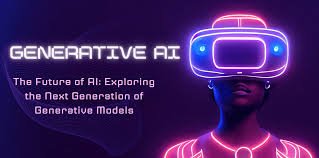
Introduction: A New Era of Intelligence Begins
Artificial Intelligence (AI) has entered a period of explosive evolution, transforming from a niche research field into one of the most influential technologies on the planet. Once limited to basic pattern recognition and rule-based systems, AI has advanced into a system capable of self-learning, self-optimization, deep reasoning, and even creative output. By 2025, AI is no longer a futuristic concept — it is a dominant force reshaping industries, economies, governments, cultures, and daily life.
But the arrival of next-generation AI represents something even bigger. Unlike early AI models, next-generation systems combine multiple technologies — machine learning, neural networks, large language models, edge AI, robotics, quantum computing, and autonomous reasoning — into a unified intelligence ecosystem. These innovations push AI from reactive tools to proactive, adaptive entities capable of solving problems humans can’t tackle alone.
This long-form guide explores the development of next-generation AI, the technologies behind it, the forces driving its acceleration, the industries transforming because of it, and the profound impact it has on humanity’s future.
Welcome to the blueprint of tomorrow.
Chapter 1: The Foundation of Next-Generation AI
To understand next-generation AI, we must first explore the core technologies that empower its development. These technologies do not evolve independently — they merge to form a new type of machine intelligence.
1.1 Large Language Models (LLMs) — The New Brain of Digital Intelligence
The rise of LLMs has been one of the most significant breakthroughs in AI. Models like GPT, Claude, Gemini, and other frontier systems are capable of:
- Understanding natural language with unprecedented depth
- Generating human-like text
- Interpreting context
- Producing creative content
- Handling complex reasoning
- Providing problem-solving insights
Next-generation LLMs integrate:
- Multimodal capabilities (text, image, audio, video)
- Long-term memory
- Real-time learning
- Self-correction mechanisms
- Adaptive personalization
These features make AI more flexible, intelligent, and capable of understanding human intention with incredible accuracy.
1.2 Neural Networks: The Architecture Behind Intelligence
Neural networks simulate how the human brain processes information. Next-gen AI uses:
- Deep neural networks (DNNs)
- Transformer architectures
- Reinforcement learning
- Self-supervised learning
Transformers remain the backbone of advanced AI due to their ability to understand long-range dependencies and complex relationships in data.
1.3 Machine Learning at Scale
Next-gen AI depends heavily on:
- Massive datasets
- High-performance computing
- Distributed training
- Fine-tuned models for specific tasks
With these, AI can detect patterns and make predictions in finance, healthcare, logistics, climate science, and more.
1.4 Cognitive AI — Machines That Reason
The new frontier of AI research focuses not only on pattern recognition but:
- Abstract reasoning
- Common-sense understanding
- Decision-making
- Self-reflection
- Causal inference
This enables AI to understand why something happens, not just what happens, bridging the gap between human and machine reasoning.
1.5 Edge AI — Intelligence Beyond the Cloud
Edge AI brings intelligence onto devices:
- Smartphones
- Cameras
- Cars
- Robots
- IoT devices
- Wearables
This allows AI to process data without sending it to the cloud — increasing speed, privacy, and efficiency.
Chapter 2: Breakthrough Innovations Driving AI Forward
The rapid development of next-generation AI is fueled by scientific, technological, and economic breakthroughs.
2.1 Quantum Computing + AI
Quantum computing promises to accelerate AI training from years to hours. With quantum processors:
- Optimization becomes faster
- Complex simulations become possible
- Machine learning models can handle massive datasets
- AI can solve scientific problems impossible for classical computers
The synergy between quantum and AI will define the future of innovation.
2.2 Autonomous Agents — AI That Acts on Its Own
Autonomous AI agents:
- Perform tasks without constant human instruction
- Manage workflows
- Schedule operations
- Conduct research
- Build software
- Execute transactions
In 2025, AI is evolving from a conversational tool to an intelligent operator.
2.3 AI Robotics — Machines That Think and Move
Next-generation robots combine AI with advanced mechanical engineering.
Capabilities include:
- Autonomous navigation
- Real-time object recognition
- Adaptive manipulation
- Human-robot collaboration
- Emotional interaction modeling
Robots powered by AI are used in factories, hospitals, warehouses, construction, agriculture, defense, and homes.
2.4 Generative AI — Creativity Beyond Human Limits
Generative AI is revolutionizing:
- Movies
- Music
- Art
- Design
- Architecture
- Game development
- 3D modeling
AI can now generate entire worlds, characters, scripts, ads, prototypes, and business assets in seconds.
2.5 AI Safety and Alignment
With AI becoming more powerful, the need for safety increases.
Safety research focuses on:
- Alignment (ensuring AI goals match human values)
- Controlling advanced AI systems
- Preventing harmful behavior
- Ethical frameworks
- Risk management
This ensures AI evolves responsibly.
Chapter 3: The Global Impact of Next-Gen AI
AI is not evolving in isolation. It is reshaping economies, industries, and global power dynamics.
3.1 AI in Business — The New Competitive Edge
Businesses use AI for:
- Automation
- Predictive analysis
- Decision support
- Customer engagement
- Financial modeling
- Product development
Companies not adopting AI risk being left behind.
3.2 AI in Healthcare — Saving Lives With Algorithms
AI is transforming healthcare:
- Diagnosing diseases
- Predicting patient outcomes
- Creating personalized treatments
- Assisting surgeons
- Managing hospital workflows
AI reduces human error and accelerates life-saving research.
3.3 AI in Finance
AI powers:
- Fraud detection
- Algorithmic trading
- Asset optimization
- Customer personalization
- Risk assessment
Banks and fintech companies rely on AI for speed and accuracy.
3.4 AI in Transportation
Self-driving vehicles represent the most advanced form of intelligent mobility:
- Autonomous cars
- AI-powered traffic control
- Supply chain automation
- Smart logistics networks
AI is reshaping global transportation systems.
3.5 AI in Government and Defense
Governments use AI for:
- Cybersecurity
- Infrastructure monitoring
- Data analysis
- Smart city management
- National defense systems
AI is becoming a strategic geopolitical asset.
Chapter 4: The Human Side of AI Development
AI development is not only about machines — it also changes human life.
4.1 AI and Jobs
While AI automates tasks, it also creates new opportunities:
- AI engineering
- Data science
- Prompt design
- Robotics management
- AI ethics
- Automation supervision
The future workforce will partner with AI, not compete with it.
4.2 AI and Education
Education systems now include:
- AI tutors
- Personalized learning platforms
- Skill assessment tools
- Adaptive curriculum
AI makes learning more efficient and widely accessible.
4.3 AI and Creativity
Human creativity is expanding with AI tools:
- Writers accelerate productivity
- Designers prototype faster
- Filmmakers create digital scenes
- Musicians produce new compositions
- Developers build software rapidly
AI is a collaborator, not a replacement.
Chapter 5: Challenges and Ethical Concerns in AI Development
Not everything is perfect. AI brings complex challenges.
5.1 Data Privacy
AI needs massive data — raising concerns about:
- Surveillance
- Data misuse
- Biased algorithms
New regulations aim to protect users.
5.2 Bias and Fairness
AI predictions can reflect biased data. Next-gen systems require:
- Transparent datasets
- Ethical training
- Continuous monitoring
Fairness is a priority.
5.3 Automation Anxiety
Many workers fear losing jobs. The future requires:
- Reskilling
- Lifelong learning
- Human-AI collaboration
5.4 Control and Safety
AI alignment ensures AI:
- Follows human goals
- Avoids harmful behavior
- Operates safely at scale
This is one of the most critical challenges.
Chapter 6: The Future of Next-Generation AI
Looking ahead, next-gen AI will become:
- More independent
- More creative
- More human-like
- More powerful
- More integrated into daily life
Upcoming breakthroughs include:
- Artificial General Intelligence (AGI)
- Emotionally aware AI
- AI-governed smart cities
- Fully autonomous factories
- AI-driven medicine
- AI scientific discovery engines
The world is on the edge of a technological renaissance.
Conclusion: A Future Shaped by Intelligence
Next-generation AI is not just a tool—it is becoming a global catalyst for innovation, efficiency, and transformation. The development of AI in 2025 marks the beginning of an era where machines learn, adapt, reason, and collaborate with humans at an unprecedented scale.
From business to healthcare, from robotics to science, from creativity to governance, AI is reshaping every corner of human civilization. Its progress is unstoppable — and its potential is limitless.
As we move deeper into the age of intelligent machines, one thing is certain:
The future will be built not just by humans, but with AI as our most powerful partner.

Tinggalkan Balasan