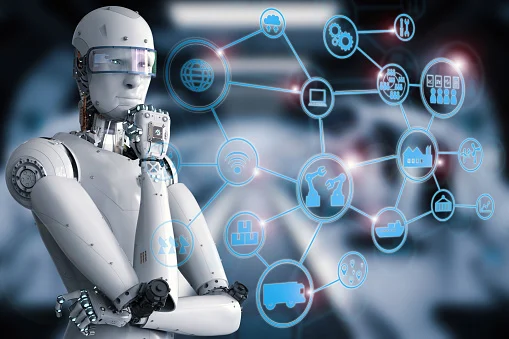
ntroduction: The Dawn of an Autonomous World
Robotics has entered a revolutionary era. Once limited to simple mechanical arms and repetitive industrial tasks, modern robots have evolved into intelligent, adaptive, and highly capable machines. These systems combine advanced AI, sensors, actuators, machine learning, and human-inspired engineering to create robotic platforms that can move, learn, perceive, decide, and collaborate with humans.
In 2025, robotics isn’t just machinery — it’s a technological force reshaping global industries, economies, and human life. From self-driving vehicles and humanoid assistants to surgical robots and autonomous drones, robotics defines the future of work, infrastructure, science, and society.
This article takes you deep into the development of modern robotics, exploring its technologies, innovations, global impact, and the profound transformation it brings to the world.
Chapter 1: The Core Technologies Behind Modern Robotics
Modern robotics is powered by a fusion of advanced technologies. Each element contributes to creating machines that can move intelligently and respond to their environment.
1.1 Artificial Intelligence as the Robotic Brain
AI is the central component enabling robots to:
- Perceive their environment
- Understand objects and spaces
- Make decisions
- Plan actions
- Learn tasks
- Communicate with humans
AI transforms robots from automated devices into adaptive workers.
Modern AI in robotics uses:
- Machine learning
- Deep neural networks
- Reinforcement learning
- Multimodal large language models
- Vision-language-action models
This allows robots to improve performance over time and operate autonomously in complex environments.
1.2 Sensor Technology: Giving Robots Human-Like Perception
Sensors provide robots with the ability to see, hear, feel, and detect:
- Cameras and LiDAR
- Depth sensors
- IMU (Inertial Measurement Units)
- Force-torque sensors
- Ultrasonic sensors
- Thermal and infrared sensors
- GPS and navigation systems
With these, robots understand physical surroundings with incredible precision — enabling tasks like mapping, object grasping, and obstacle avoidance.
1.3 Mechanical Engineering: The Body Behind the Brain
Robotic design has advanced significantly with:
- Lightweight materials
- High-strength alloys
- Flexible joints
- Soft robotics
- Bio-inspired engineering
- Energy-efficient actuators
Modern robots can mimic human movements, balance themselves, and interact safely with humans.
1.4 Control Systems: Coordination and Precision
Control algorithms allow robots to execute smooth, efficient actions.
This includes:
- Motion planning
- Path optimization
- Balance control
- Real-time feedback loops
- Robotic kinematics and dynamics
These systems enable robots to move with precision — from surgical tools to factory arms.
1.5 Connectivity and Cloud Robotics
Connectivity is critical for next-gen robots.
Robots now use:
- 5G/6G communication
- Cloud-based processing
- Edge AI
- Distributed robotic networks
This enables real-time coordination, remote updates, and large-scale robotic fleets.
Chapter 2: Breakthrough Innovations Shaping Modern Robotics
Robotics development in the last decade has introduced groundbreaking innovations, pushing machines closer to human-like capabilities.
2.1 Autonomous Robots and Self-Learning Systems
Thanks to reinforcement learning, robots now teach themselves tasks:
- Sorting objects
- Navigating environments
- Manipulating tools
- Understanding human instructions
Self-learning robots reduce development time and increase flexibility.
2.2 Humanoid Robots — Machines That Move Like Humans
Companies like Tesla, Figure, Agility Robotics, and Xiaomi are pioneering humanoids capable of:
- Walking
- Lifting
- Carrying objects
- Using tools
- Conversing with humans
Humanoids can perform jobs in warehouses, factories, retail stores, and eventually households.
2.3 Collaborative Robots (Cobots)
Cobots are designed to safely work alongside humans.
Characteristics:
- Lightweight
- Easy to program
- High safety sensors
- Flexible deployment
Cobots are transforming manufacturing and small businesses.
2.4 Surgical and Medical Robots
Healthcare robotics has exploded with precision-focused machines used in:
- Surgery
- Diagnostics
- Rehabilitation
- Pharmacy automation
- Elderly care
Robotic surgery combines exactness with minimal invasiveness — reducing patient recovery time.
2.5 Autonomous Vehicles and Mobility Robotics
Self-driving systems are among the most advanced robotic developments.
Includes:
- Autonomous cars
- Delivery robots
- Smart drones
- Robotic wheelchairs
- AI-powered traffic systems
These machines are redefining global transportation.
2.6 Agriculture Robotics
Robots for farming:
- Plant seeds
- Spray crops
- Inspect plantations
- Harvest fruits and vegetables
- Monitor soil and moisture levels
Agriculture robotics boosts efficiency and addresses labor shortages.
Chapter 3: Robotics Across Industries — Transforming the Global Economy
Robotics development impacts nearly every major industry.
3.1 Manufacturing and Automation
Robots dominate modern factories with roles in:
- Welding
- Packaging
- Assembly
- Testing
- Quality control
Automation increases consistency, safety, and production speed.
3.2 Healthcare and Medicine
Robots assist in:
- Minimally invasive surgeries
- Medical imaging
- Laboratory automation
- Patient care
- Physical therapy
AI-driven robots reduce human error and improve diagnostic accuracy.
3.3 Logistics and Warehousing
Companies like Amazon, Alibaba, and DHL rely heavily on robotics:
- Warehouse bots
- Automated forklifts
- Inventory drones
- Robotic sorters
Robots accelerate order fulfillment and reduce operational costs.
3.4 Retail and Customer Service
Robots are becoming assistants and service providers in:
- Supermarkets
- Hotels
- Restaurants
- Airports
They help with checkout, cleaning, customer inquiries, and food delivery.
3.5 Military and Defense Robotics
Defense organizations deploy robots for:
- Surveillance
- Bomb disposal
- Autonomous drones
- Rescue missions
- Border monitoring
Robotics reduces risk to human soldiers.
3.6 Construction Robotics
Construction robots handle:
- Bricklaying
- Excavation
- Structural inspection
- Material transport
- 3D printing of buildings
These robots speed up construction and improve safety.
Chapter 4: The Human-Robot Collaboration Era
With the rise of robotics, humans and machines are becoming partners.
4.1 How Robots Enhance Human Capabilities
Robots support humans by:
- Reducing physical strain
- Increasing efficiency
- Handling repetitive or dangerous tasks
- Enhancing precision
- Providing cognitive assistance
Robots free humans to focus on creativity and decision-making.
4.2 Social Robots and Emotional Intelligence
Robots such as AI companions and social assistants can:
- Hold conversations
- Recognize emotions
- Provide companionship
- Support mental health
- Assist children and the elderly
Social robotics is expanding rapidly as AI becomes more empathetic.
4.3 Robots in Education
Robots can act as:
- Teaching assistants
- STEM instructors
- Language tutors
- Hands-on learning tools
They make learning more interactive and accessible.
Chapter 5: Challenges in Modern Robotics Development
Despite progress, robotics faces major hurdles.
5.1 Technical Limitations
Robots still struggle with:
- Dexterity tasks
- Adapting to unpredictable environments
- Handling delicate objects
- Understanding human nuance
Advances in AI and mechanical engineering aim to improve this.
5.2 High Costs and Deployment Barriers
Robots require:
- Expensive hardware
- Specialized maintenance
- Skilled operators
- Infrastructure changes
This limits adoption for small businesses.
5.3 Ethical and Social Concerns
Concerns include:
- Job displacement
- Privacy
- Safety risks
- Weaponization
- Dependence on automation
Proper regulations and design are essential.
5.4 Human-Robot Trust Issues
Humans must trust robots to:
- Make safe decisions
- Protect personal data
- Avoid harmful actions
Building trust requires transparency and predictable behavior.
Chapter 6: The Future of Modern Robotics
The next phase of robotics will be extraordinary.
6.1 Fully Autonomous Smart Cities
Robots will manage:
- Traffic systems
- Waste collection
- Rescue operations
- Disaster response
- Urban logistics
Cities will run more efficiently with robotic support.
6.2 Hyper-Intelligent Humanoid Workers
Next-gen humanoids may become:
- Construction workers
- Service staff
- Personal assistants
- Lab technicians
- Caregivers
With advanced AI, they will understand complex tasks naturally.
6.3 Robotics in Space Exploration
NASA, SpaceX, and others use robots for:
- Planet exploration
- Habitat construction
- Mining
- Maintenance
Robots will be pioneers in building civilizations beyond Earth.
6.4 Brain–Robot Interfaces
Human-robot symbiosis is approaching reality.
Interfaces may allow humans to:
- Control robots mentally
- Enhance physical abilities
- Recover motor function
- Operate machinery remotely
This will transform medicine and labor.
6.5 Swarm Robotics
Groups of robots operating like insect colonies can:
- Build structures
- Conduct search and rescue
- Explore hazardous zones
- Perform coordinated missions
Swarm intelligence is a game-changer for large-scale tasks.
Conclusion: The Rise of Intelligent Machines and the Future of Humanity
The development of modern robotics marks one of the greatest technological revolutions in human history. Intelligent machines are becoming part of daily life — assisting in work, healthcare, transportation, communication, construction, and even companionship.
Robotics represents more than automation; it is the merging of human ingenuity with digital precision. As these machines advance, humanity steps into an era of unprecedented capability, creativity, and transformation.
Robots are not replacing humans — they are extending what humans can achieve.
The future is one where humans and intelligent machines build the world together.



Tinggalkan Balasan