Introduction
Artificial Intelligence (AI) has reached a transformative phase in 2025, becoming the backbone of innovation, automation, and digital transformation across industries. Over the past decade, AI has evolved from being a theoretical concept to an indispensable tool driving global economies, reshaping education, healthcare, governance, and even human creativity. With advancements in generative models, multimodal AI systems, and cognitive computing, 2025 marks a critical point in the history of human-technology collaboration.
The year 2025 is witnessing the maturation of AI technologies such as large language models (LLMs), autonomous systems, and neural-symbolic integration. The boundaries between human and machine intelligence are increasingly blurred, leading to a hybrid ecosystem where AI serves as a co-pilot in decision-making and creativity. This article explores in depth the state, impact, and future trajectory of Artificial Intelligence in 2025.
The Evolution of AI from 2020 to 2025
Between 2020 and 2025, AI underwent rapid acceleration due to several technological catalysts. The global pandemic in the early 2020s acted as a trigger for digital transformation, compelling industries to adopt automation, remote intelligence, and AI-driven analytics. Machine learning frameworks became more efficient, cloud computing became affordable, and data availability expanded exponentially.
By 2025, the convergence of AI with 5G, quantum computing, and edge intelligence has redefined what machines can accomplish. Large-scale models such as GPT-5, Gemini 2, and DeepMind’s Alpha-Intelligence Suite have pushed the boundaries of natural language understanding, real-time translation, and contextual reasoning. These models are no longer limited to text or image — they operate across modalities, processing text, audio, video, and sensory data simultaneously.
Breakthroughs in AI Technologies in 2025
AI in 2025 is characterized by the integration of multimodal intelligence, self-learning algorithms, and autonomous decision systems. The most significant breakthroughs include:
1. Generative AI and Creative Automation
Generative AI has evolved from content generation to creative co-piloting. Tools like OpenAI’s GPT-5 and Google’s Imagen 3 allow creators to produce movies, music, and designs collaboratively with machines. AI can now understand narrative arcs, emotional tone, and artistic styles, making it a partner in creative industries rather than just a tool.
2. Multimodal and Embodied AI
2025 marks the rise of embodied AI — robots and systems that perceive, reason, and act in the real world. Multimodal AI combines vision, speech, and reasoning, allowing humanoid robots to communicate naturally and assist humans in complex environments such as healthcare facilities, factories, and homes.
3. AI in Quantum Computing
Quantum-enhanced AI is another major advancement. Quantum algorithms accelerate model training, enabling AI systems to analyze massive datasets that were previously computationally infeasible. Quantum-AI synergy is propelling breakthroughs in material science, drug discovery, and cryptography.
4. Autonomous Systems and AI Governance
From autonomous vehicles to self-managing smart grids, AI systems in 2025 are capable of operating with minimal human oversight. Governments and international organizations have established AI governance frameworks to ensure accountability, transparency, and ethical compliance in autonomous operations.
AI in Key Industries in 2025
1. Healthcare
AI in healthcare has become predictive, personalized, and preventive. AI-driven diagnostics, powered by multimodal models, analyze genetic, behavioral, and clinical data to deliver early disease detection. Robotic surgeries are now semi-autonomous, guided by real-time feedback from AI systems.
2. Education
In education, adaptive learning systems powered by AI personalize student experiences. AI tutors leverage cognitive modeling to understand learning styles, helping bridge the global education gap and providing access to quality education in remote regions.
3. Finance and Economics
The financial sector in 2025 is heavily reliant on AI-driven analytics for fraud detection, algorithmic trading, and credit scoring. Central banks use AI to predict macroeconomic shifts and prevent systemic risks. Decentralized finance (DeFi) and AI integration have reshaped financial inclusion worldwide.
4. Manufacturing and Industry 5.0
The transition from Industry 4.0 to Industry 5.0 is characterized by the collaboration between human creativity and robotic precision. AI-driven robotics, 3D printing, and smart sensors have revolutionized production, minimizing waste and improving efficiency.
5. Transportation and Smart Cities
AI’s role in transportation extends beyond autonomous driving. In 2025, AI orchestrates traffic management, energy distribution, and public safety. Smart cities employ AI to predict environmental conditions, optimize logistics, and enhance sustainability.
6. Ethical, Legal, and Social Implications
As AI becomes deeply integrated into society, it also raises complex ethical and legal challenges. Privacy, surveillance, algorithmic bias, and job displacement are at the center of the AI debate.
7. Privacy and Data Ethics
With AI’s growing appetite for data, 2025 has seen stricter global data protection laws. Techniques like federated learning and differential privacy are used to preserve user anonymity while still allowing AI to learn effectively.
8. Algorithmic Fairness
AI bias remains a major concern. Organizations are now mandated to conduct algorithmic audits, ensuring that AI decisions are explainable and free from discrimination.
9. Employment and Workforce Transition
While AI automates routine tasks, it also creates new jobs in prompt engineering, ethical AI governance, and human-AI collaboration. Governments have launched reskilling programs to prepare workers for AI-driven economies.
AI and Global Geopolitics
Artificial Intelligence has become a strategic asset in international relations. Nations compete for dominance in AI infrastructure, semiconductor supply chains, and data sovereignty. The U.S., China, and the European Union lead the AI race, but emerging nations are catching up rapidly through open-source collaboration and academic partnerships.
The geopolitics of AI is shaping new alliances — the AI Stability Pact of 2025 aims to prevent misuse of AI in warfare and disinformation. Meanwhile, the United Nations has launched a Global AI Ethics Charter to standardize responsible AI development.
AI in Creativity and Culture
2025 marks a cultural revolution powered by AI-generated art, literature, and entertainment. AI systems co-create films, music, and even video games. Artists and developers view AI as a muse — a cognitive collaborator capable of augmenting human imagination.
Generative models are trained not just on data, but on aesthetic and emotional frameworks, making AI art emotionally resonant. AI-driven museums and virtual reality exhibitions are emerging as mainstream cultural experiences.
Future Trends Beyond 2025
1. Artificial General Intelligence (AGI) is under development. Researchers are exploring systems capable of performing any intellectual task a human can do, pushing humanity closer to a new era of cognitive partnership.
2. Neuro-AI Integration – Brain-computer interfaces (BCIs) allow direct communication between the human mind and AI systems, enhancing memory, creativity, and perception.
3. Sustainable AI – Green computing initiatives ensure AI models are energy-efficient, aligning with the global climate agenda.
4. AI Legislation 2030 – Countries are drafting comprehensive AI constitutions to regulate ethics, safety, and human rights in a machine-augmented society.
Conclusion
Artificial Intelligence in 2025 is no longer just a tool but a transformative ecosystem shaping the way we live, work, and think. The convergence of AI with quantum computing, neuroscience, and robotics is propelling humanity toward an era where intelligence itself becomes decentralized and democratized. Yet, with great power comes great responsibility — the challenge lies in ensuring that AI evolves ethically, inclusively, and sustainably.
As we move toward 2030, the role of AI will expand beyond automation into augmentation — empowering humanity to reach new levels of creativity, empathy, and intelligence. The story of AI is, ultimately, the story of human evolution — a testament to our quest to understand and replicate intelligence itself.
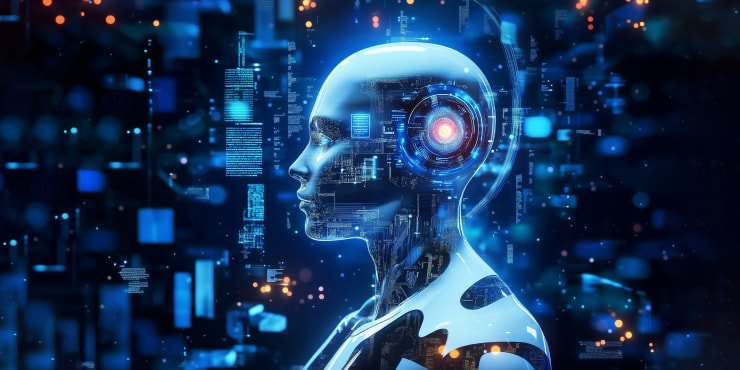
The Development of Artificial Intelligence in 2025
•
Recent Posts
- The Development of Digital Infrastructure: Building a Faster, Smarter, and More Connected World
- The Development of Modern Robotics: How Intelligent Machines Are Transforming Human Civilization

- he Development of Next-Generation Artificial Intelligence: Innovations Shaping the Future
- The Development of Artificial Intelligence in 2025
- The Evolution of Robotics Technology in 2025: Innovations, Impacts, and Future Directions
Tinggalkan Balasan